
Rochester Construction Outlook: Strong 2026 Ahead Despite Industry Challenges
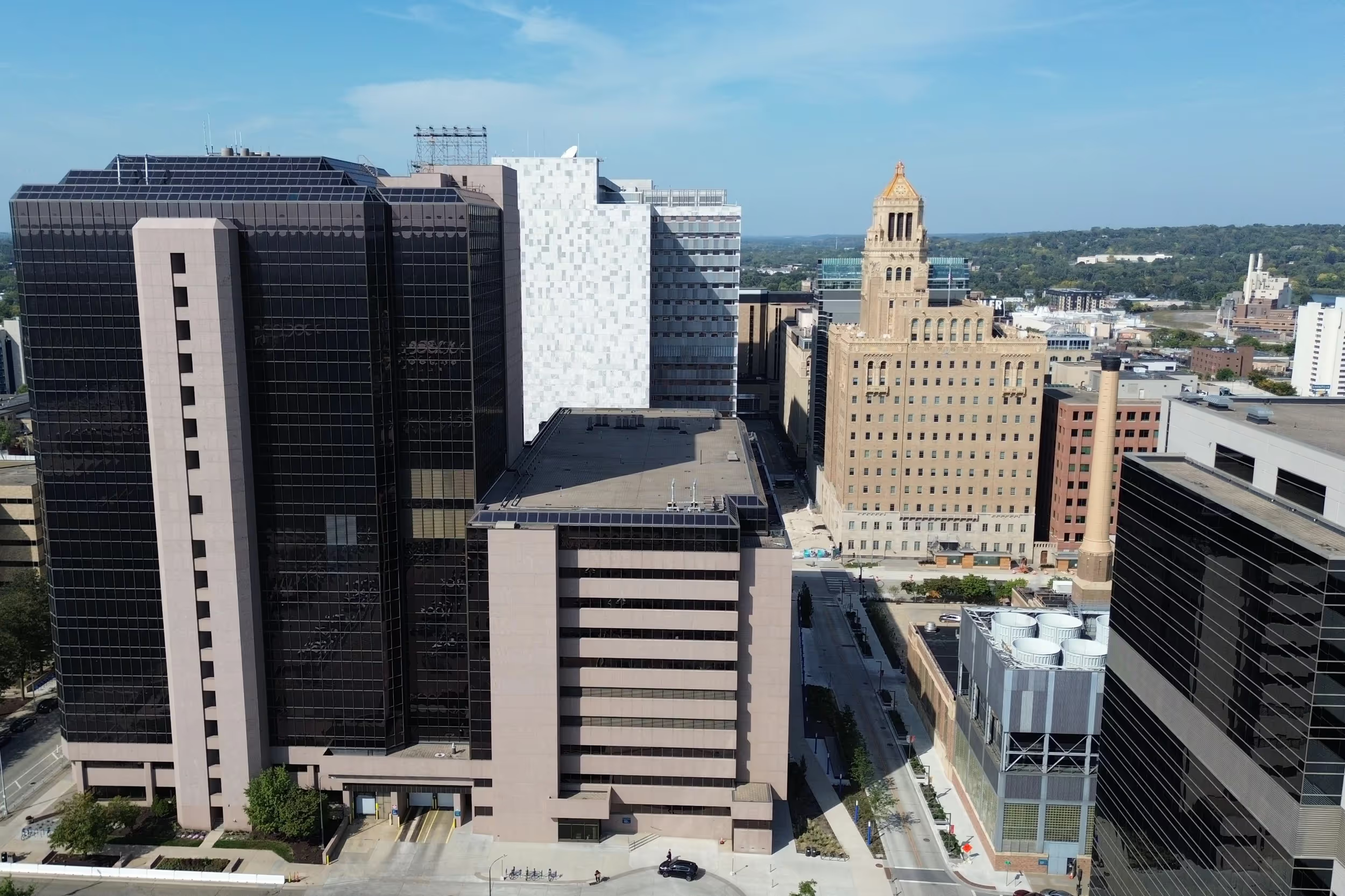
Rochester's construction sector is poised for sustained growth in 2026, according to local industry leaders from two of the region's largest construction firms. Despite nationwide labor shortages and supply chain pressures, Rochester-based contractors remain optimistic about the year ahead, citing robust demand in healthcare, education, and public-sector projects.
The American Institute of Architects projects nonresidential construction spending to rise 4% in 2026, led by public-sector, healthcare, and education work. This outlook aligns closely with what's happening in the Rochester market, where major projects continue to move forward and new opportunities emerge across multiple sectors.
LeChase Construction: Optimistic for Sustained Growth
James "Jim" McKenna, senior vice president of LeChase Construction Services, a Rochester-based full-service construction management and general construction firm established in 1944, expressed confidence in 2026 prospects. "We're pretty optimistic for a strong 2026 locally," McKenna said. "We don't see a large change over from 2025."
LeChase remains focused on core sectors including higher education, healthcare, and manufacturing—segments that continue to demonstrate steady demand both locally and nationally. McKenna emphasized that federal incentives continue to sustain manufacturing and energy-related projects across the country, providing additional momentum for the coming year.
Addressing Labor Constraints Through Innovation
One of the most pressing challenges facing the industry is the persistent labor shortage. McKenna noted that LeChase is actively addressing this constraint through strategic innovation: "We continue to stay focused on offsite prefabrication, as a way to deal with some of the current labor environment issues."
LeChase now has the ability to modularize and prefabricate major components including exterior wall panels, interior walls, and even complete rooms in a controlled environment before transporting them to the jobsite. According to McKinsey & Co., modular construction can shorten construction schedules by 20–50%, providing both efficiency and quality improvements.
"Working in controlled environments also supports health and safety, which is always a core focus of ours," McKenna explained. The company continues to invest in workforce development as well, including expanding opportunities for disadvantaged contractors and maintaining a strong internship program designed to build the next generation of construction professionals.
Technology and AI as Competitive Advantages
Beyond prefabrication, LeChase is leveraging emerging technologies to maintain its competitive edge. "We stay focused on innovation, keeping pace with industry technologies and AI," McKenna said. The integration of artificial intelligence tools into project planning, scheduling, and resource management represents a critical opportunity for firms to overcome workforce constraints and improve project delivery.
"Despite industry-wide challenges, we remain fairly optimistic," McKenna concluded, "and we believe the industry as a whole is cautiously optimistic, especially in markets such as Rochester."
Pike Construction: Workforce Challenges Will Define 2026
Terry Stevens, executive vice president at Pike Construction Services, offered a complementary perspective on 2026, emphasizing that technology, workforce scarcity, and cost pressures will shape industry performance. Pike, a fifth-generation Rochester-based firm founded in 1873, brings nearly 150 years of construction expertise to the market.
The Skills Gap Challenge
"Labor continued to be a constraint in all aspects," Stevens explained. The root causes are well-documented: skilled workers are retiring faster than they're being replaced, fewer young people are entering the trades, and immigration policies are tightening the talent pool. According to the Associated Builders and Contractors, approximately 499,000 to 500,000 new skilled workers are required in 2026 to keep up with industry demand.
"The real question industrywide as we progress into 2026 isn't so much about do we have the work, but do we have the resources and people to actually perform the work?" Stevens said.
Supply Chain and Cost Volatility
Beyond labor, cost volatility and procurement challenges continue to impact project planning. "The supply chain and the tariffs are impacting the industry," Stevens noted. Long-lead items such as electrical switchgear have become particularly difficult to source with certainty. "In some cases, it's very difficult to provide an owner with a final date of completion," he explained.
Pike addresses these challenges through transparency, clear communication, and collaborative problem-solving. "Owners are looking for predictability and precision," Stevens said. "The teams that continue to succeed will deliver project certainty in cost, budget and schedule, while also continuing to explore new technology tools."
Rochester Market Momentum: Renovation and Adaptive Reuse
In Rochester specifically, healthcare, public, and institutional work remain robust for Pike. Stevens noted a significant shift in market dynamics: "Right now it's not just about building from the ground up, it's also about jobs where people are trying to use what they already have and trying to retrofit."
A prime example is the Rochester Broadway Theater League (RBTL) partnership with Pike, LaBella Associates, and community advisors on a $65 million renovation effort of the West Herr Performing Arts Center on East Main Street. Named PROJECT RESTOURATION, it will be the largest renovation by an arts organization in Rochester's history when completed in 2030. This project exemplifies the trend toward adaptive reuse and building modernization in Rochester's downtown corridor.
"Pike is also continuing to do significant work in healthcare currently as well," Stevens added. "There's still a lot of opportunities out there. People are still building. I expect a strong market next year nationally and locally."
What This Means for Rochester Contractors and Developers
The consensus from these two major players is clear: 2026 will bring continued growth and opportunity in Rochester, but success will require strategic thinking around workforce, technology adoption, and project delivery innovation. Contractors who embrace prefabrication, invest in technology tools, and prioritize clear communication with clients will be best positioned to thrive.
The focus on public-sector and institutional work—including healthcare, education, and arts projects—creates diverse opportunities across the region. The renovation and adaptive reuse trend also suggests strong potential for firms specializing in complex modernization projects.
Key Takeaways for the Industry
- Growth Expected: AIA projects 4% increase in nonresidential construction spending in 2026, with Rochester aligned with this outlook
- Labor Shortages Persist: Industry needs 499,000-500,000 new skilled workers in 2026; immigration restrictions and retirements will continue to challenge the workforce
- Technology Solutions: Modular construction, AI tools, and prefabrication offer competitive advantages for forward-thinking firms
- Strong Local Sectors: Healthcare, education, and public-sector work will drive Rochester market growth
- Renovation Momentum: Adaptive reuse and major renovation projects like RBTL's $65M West Herr project demonstrate strong demand for modernization
- Project Certainty Critical: Clients increasingly demand predictability in cost, schedule, and budget; firms that deliver transparency will win work
Source: Rochester Business Journal, "Rochester construction leaders forecast strong 2026" by Caurie Putnam, December 11, 2025. Industry data from American Institute of Architects, Associated Builders and Contractors, and McKinsey & Co.


Discuss an Upcoming Project


