

news +insights
Labor Shortage Threatens to Derail Construction Rebound in 2026
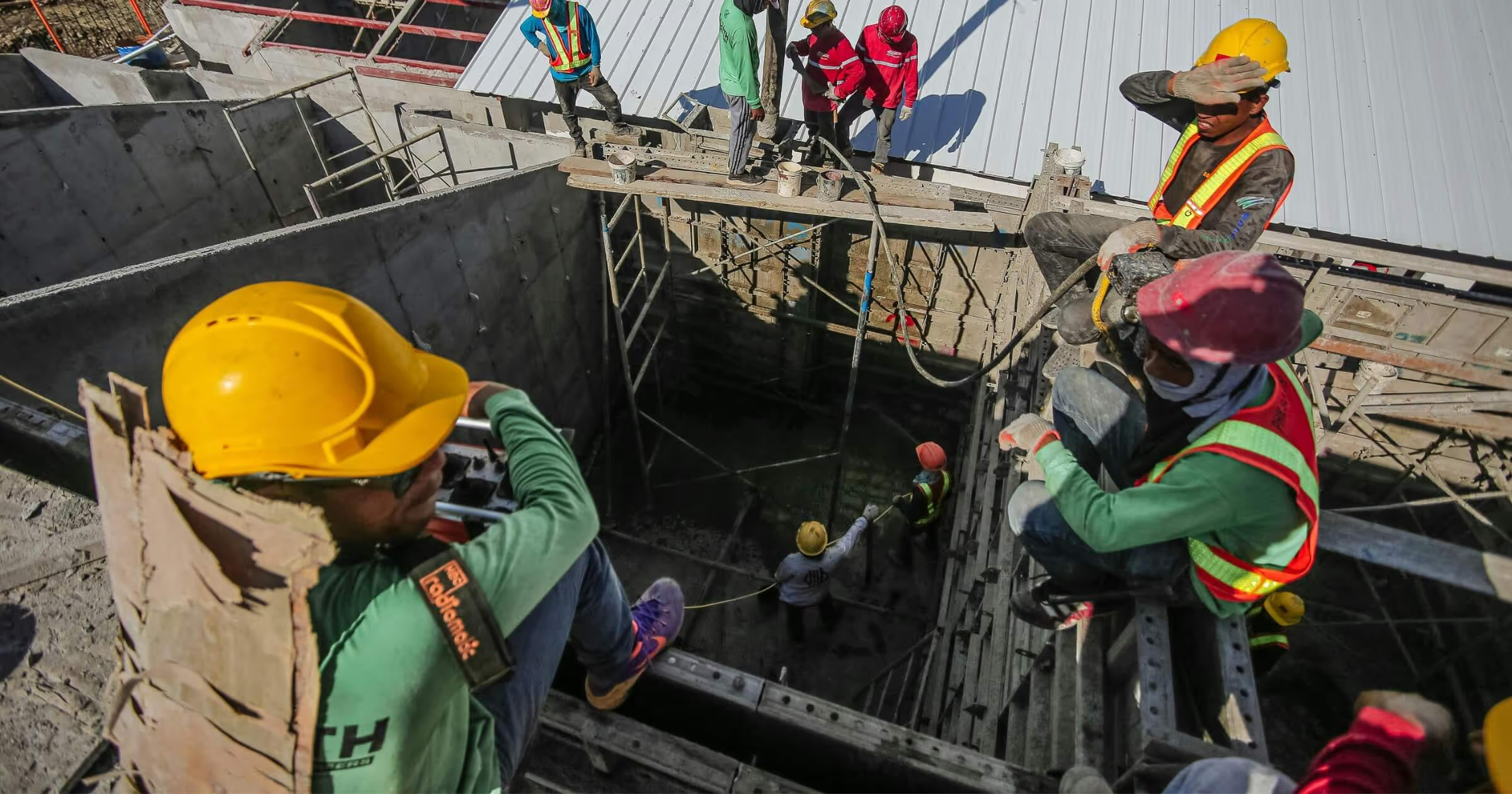
As Construction Accelerates in Early 2026, Workforce Crisis Threatens Project Momentum
Just as individual market sectors are finding ways to move projects forward after a year of supply chain and cost turbulence, the ongoing labor shortage threatens to significantly slow construction progress unless owners and contractors embrace new approaches and technologies. This warning comes from DPR Construction's latest Market Conditions Report, released December 9, 2025, and supported by data from the Associated General Contractors of America (AGC).
Critical Labor Market Findings
A recent survey by the Associated General Contractors of America (AGC) and the national Center for Construction Education and Research reveals a construction industry facing severe hiring challenges:
- 88% of firms hiring craft workers reported unfilled job openings
- 80% of firms employing salaried staff reported unfilled positions
- Comparable percentages reported that all openings are harder to fill than a year ago
- 45% of respondents reported project delays directly attributed to worker shortages
- Nearly 30% of firms cited immigration enforcement actions as contributing to labor strain, directly or indirectly
The Core Challenge: Scale and Timeline
"While contractors like DPR have changed how they recruit and are offering compelling career paths and benefits, the reality is it will take at least a generation to fully address the labor shortage," said Roel Aguilar, DPR's national preconstruction leader. "Owners looking to create more predictability should consider a self-performing general contractor and be open to new methods and technologies that can increase project efficiency using the existing workforce."
Industry Sectors Driving 2026 Growth
Despite labor challenges, significant construction activity is projected across multiple sectors in 2026:
- Advanced Technology: Projected as significant driver for construction demand
- Life Sciences: Continued strong project pipeline
- Healthcare: Capital programs shaped by new legislation and reimbursement models
- Higher Education: Adapting to "new normal" based on policy and student preferences
- Commercial Office: Signs indicate market is beginning to awaken after 2025 slowdown
Strategic Contractor Responses to Labor Constraints
Leading contractors like DPR are not waiting for the labor market to resolve itself. They're implementing multiple strategies to maintain productivity and project momentum:
1. Workforce Optimization
- Self-performing workforce: DPR maintains over 5,000 self-perform workers, reducing dependency on subcontractor availability
- Recruitment innovation: Changing how firms recruit to compete for available talent
- Career development: Offering compelling career paths and benefits to attract and retain workers
2. Project Delivery Innovation
- Progressive forms of delivery: Methods that increase speed-to-market and reduce overall timeline
- Lean construction techniques: Embracing lean principles to maximize efficiency with existing workforce
3. Cross-Sector Best Practices
- Scaling solutions across markets: Applying best practices from booming sectors (like data centers) to traditional construction markets
- Technology integration: Piloting new technology to extend productivity and availability of existing labor
What This Means for Project Owners
Construction owners and developers should prepare for labor constraints to significantly impact 2026 project timelines and costs:
- Select self-performing general contractors with substantial in-house workforce capacity
- Be open to new delivery methods and technologies that maximize labor efficiency
- Plan for extended timelines when labor availability is constrained
- Budget for wage pressure as competition for skilled trades intensifies
- Consider phased project approaches that reduce simultaneous labor demand
What This Means for Construction Contractors
The labor shortage simultaneously presents challenges and opportunities for construction firms:
- Challenges: Difficulty recruiting and retaining skilled workers; project delays; wage inflation
- Opportunities: Firms with strong workforces gain competitive advantage; premium pricing for reliable delivery; market consolidation favors larger, better-capitalized firms
- Strategic imperative: Investment in technology, process innovation, and workforce development becomes critical competitive differentiator
The Bigger Picture: Immigration and Demographics
The labor shortage reflects multiple long-term structural factors beyond immediate 2025-2026 cyclical conditions:
- Demographic shift: Aging Baby Boomer generation reducing working-age population
- Immigration enforcement: Stricter policies affecting construction industry's traditional labor supply
- Generational change: Younger generations pursuing different career paths, reducing new trades recruitment
These factors suggest the labor shortage will persist well beyond the current construction cycle, supporting Aguilar's assessment that resolution will take "at least a generation."
Source
DPR Construction Q4 2025 Market Conditions Report | Associated General Contractors of America (AGC) Workforce Survey | PR Newswire | December 9, 2025


Let's connect
For organizations planning commercial, industrial, or infrastructure work, we will review the project and recommend the appropriate delivery approach.

Join our team
If you hold yourself to careful, accountable work, you already work the way we do.