
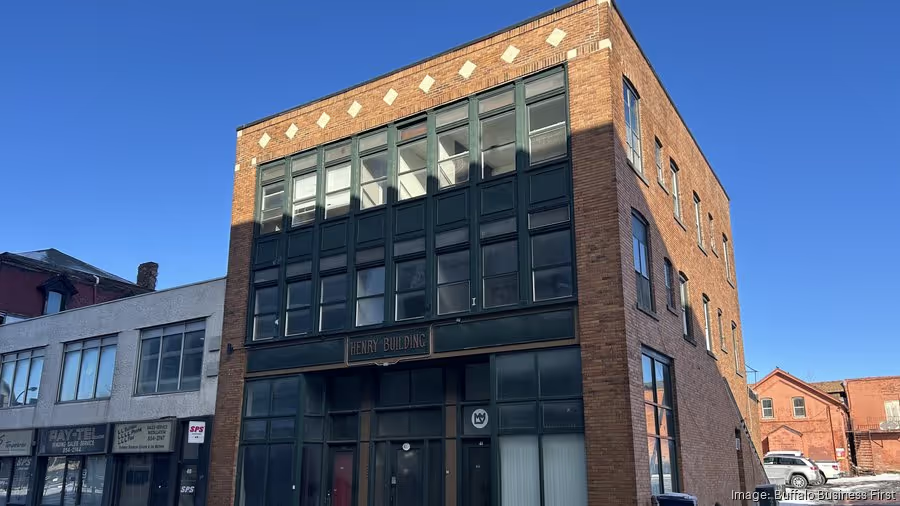
Governor Hochul Invests $10M in Buffalo's East Side Commercial Revitalization
Governor Kathy Hochul announced a major economic development initiative on December 16, 2025, awarding $10 million to 35 commercial and mixed-use projects on Buffalo's East Side. The announcement, made through the East Side Building Fund program, represents a substantial commitment to revitalizing one of Buffalo's historically significant neighborhoods and addressing long-standing community development needs. This comprehensive investment strategy focuses on reducing financial barriers for property owners while catalyzing broader neighborhood transformation.
The Governor's initiative recognizes that commercial corridor revitalization requires coordinated investment in both property improvements and new development. By distributing funding across 35 individual projects rather than concentrating resources on a few large initiatives, the state has created a broad-based impact strategy that addresses neighborhood development needs across diverse properties and business types.
Affordable Housing Development in Strategic Locations
A critical component of the East Side Building Fund investment is support for new affordable housing unit development on Laurel Street and Hickory Street. These residential projects represent essential community investment in affordable housing, addressing critical shortages in a neighborhood where affordable units remain in high demand. The integration of new residential development with commercial property improvements creates mixed-use neighborhoods that support both business activity and residential stability.
Affordable housing development in commercial corridors creates conditions for sustained neighborhood vitality. Residential occupancy generates foot traffic that supports commercial businesses, while improved commercial corridors enhance the residential environment for neighborhood residents. This symbiotic relationship between housing and commercial development is fundamental to successful neighborhood revitalization strategies.
Commercial Property Renovation Projects
The East Side Building Fund provides financial support for renovations and improvements to established businesses and landmark properties throughout the corridor. The funded projects include improvements to Styles of Man, Ladies of Charity of Buffalo, Phat Catz Restaurant & Bar, Doris Records, and Imperial Food Market. These diverse business types—ranging from restaurants and specialty retailers to community organizations and cultural institutions—represent the economic and social diversity that characterizes vibrant urban neighborhoods.
Each of these properties contributes to neighborhood identity and character. Styles of Man represents men's fashion retail tradition in the neighborhood. Ladies of Charity of Buffalo serves important community services. Phat Catz Restaurant & Bar provides dining and entertainment options. Doris Records maintains the neighborhood's cultural and musical heritage. Imperial Food Market serves diverse community culinary needs. Supporting improvements to these properties strengthens the neighborhood's cultural identity while maintaining businesses that serve established community functions.
Easing Financial Burden on Property Owners
Governor Hochul emphasized the economic rationale behind the East Side Building Fund approach, noting that "By easing the financial burden on property owners, we are directly investing in our commercial corridors, ensuring they are revitalized and better equipped to anchor and support East Side neighborhoods for years to come." This statement reflects recognition that property owners in urban neighborhoods frequently face capital constraints that limit their ability to make necessary improvements and maintain competitive commercial operations.
Without grant funding or reduced-cost financing support, property owners must either self-finance improvements—often impossible given narrow profit margins in urban retail and restaurant operations—or undertake expensive commercial debt. By providing direct funding to ease these financial constraints, the state removes barriers that otherwise prevent property owners from making necessary capital investments. This approach recognizes that property owner financial capacity, not willingness to invest, often represents the constraint limiting neighborhood revitalization.
Strategic Focus on Commercial Corridor Development
The East Side Building Fund represents a deliberate policy focus on strengthening Buffalo's commercial corridors as the foundation for neighborhood stability and economic activity. Commercial corridors serve multiple essential functions: they provide employment opportunities, offer retail and service amenities to residents, generate tax revenue, and contribute to neighborhood cultural identity and vibrancy. Well-maintained commercial corridors signal neighborhood investment and attract additional private sector interest.
By concentrating public investment on commercial corridor revitalization, the state leverages limited public resources to create conditions that attract private sector investment. Property owners who see neighboring properties being improved are more likely to invest in their own properties. Businesses operating in revitalized corridors experience improved customer traffic and neighborhood perception. Cultural institutions find enhanced community engagement. This demonstration effect amplifies the impact of initial public investment.
Job Creation and Economic Development Impact
The East Side Building Fund initiative directly supports job creation and economic development throughout Buffalo's East Side. Property improvements require construction employment. Renovated businesses expand payrolls and operating hours. New affordable housing development generates construction jobs and property management employment. New residents in completed housing projects provide customer bases for area businesses. These economic multiplier effects ripple throughout the neighborhood economy.
Governor Hochul's statement emphasized that the initiative represents "direct investment in our commercial corridors, ensuring they are revitalized and better equipped to anchor and support East Side neighborhoods for years to come." This long-term perspective recognizes that sustainable neighborhood development requires commercial corridor strength, appropriate housing stock, and conditions that encourage both business stability and residential continuity.
Building Momentum for East Side Revitalization
The $10 million award to 35 projects provides substantial momentum for East Side commercial and residential development. As improvements are completed and businesses expand operations in newly renovated spaces, the neighborhood's character and economic vitality strengthen. New residents moving into affordable housing units add neighborhood population density and consumer demand. These tangible improvements create visible demonstration effects that encourage additional private investment.
Buffalo's East Side Building Fund represents a strategic public investment approach that recognizes commercial corridor revitalization as foundational to neighborhood development. As these 35 projects advance through design and construction phases, the initiative will contribute measurable economic activity and neighborhood improvement to one of Buffalo's historically significant communities.
Source: News 4 Buffalo (WIVB), December 16, 2025


Discuss an Upcoming Project


